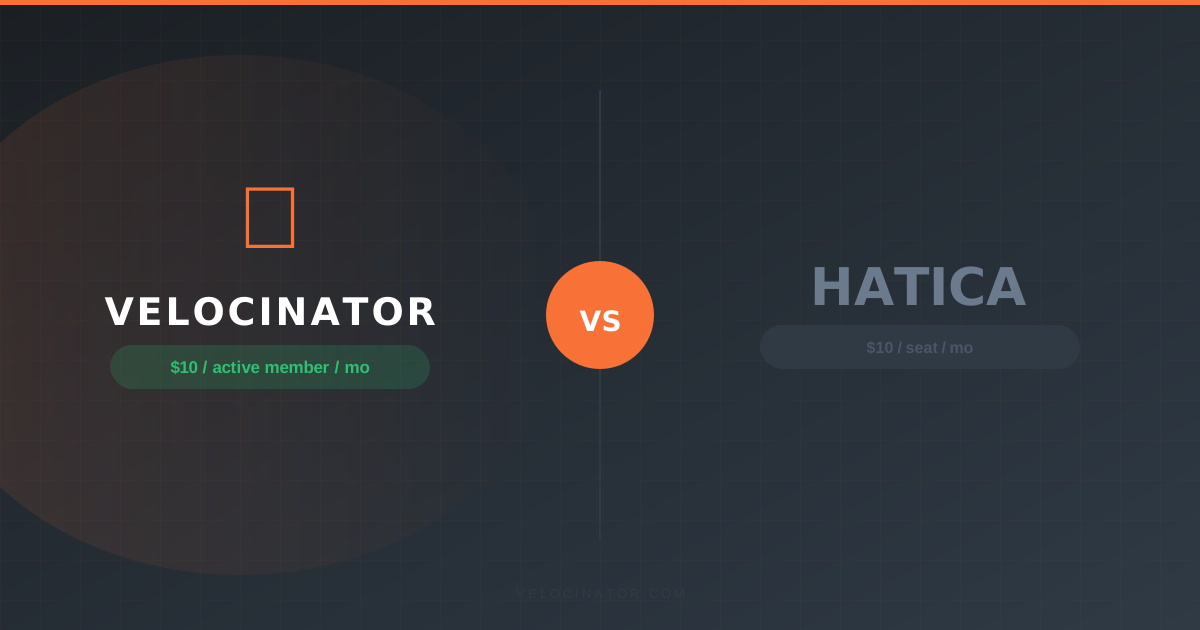
Hatica and Velocinator occupy a similar market position: both are priced at $10 per seat per month, and both aim to improve engineering team productivity through data visibility.
But the platforms take different approaches. Hatica's core strength is async standup check-ins and work visibility dashboards. Velocinator's strength is deep engineering intelligence: automated DORA metrics, AI-powered team insights, PR analytics, and release summaries.
If you're deciding between them, this comparison will help you understand which one fits your team's needs.
What Is Hatica?
Hatica is an engineering analytics platform built around work visibility and async team communication. Its standout feature is Check-ins — customizable async standup forms delivered via Slack, Microsoft Teams, or email that pull in activity data from GitHub, Jira, and Google Calendar automatically.
Hatica also offers engineering dashboards, DORA metrics, code review analytics, and developer well-being tracking. It's designed to be accessible to teams of all sizes and offers a free forever plan for small teams.
Where Hatica Falls Short
Limited API Filtering. Hatica's ability to filter metrics by custom groups is restricted. Teams that need granular control over how metrics are sliced — by team, by repository, by project — often find the platform's filtering too basic.
Lower Customization Depth. Users looking for deep customization of dashboards and metrics find Hatica more limited compared to platforms like Waydev. The dashboards are useful but somewhat fixed in how they can be configured.
Resource Planning Gaps. Hatica doesn't support the kind of precise resource allocation and cost tracking that engineering managers at larger organizations need for executive reporting.
Platform Maturity. Hatica is still a relatively newer platform, and while it's improving rapidly, some features are less polished than those of more established competitors.
Focus on Standups, Not Deep Engineering Analysis. Hatica's differentiation is async standups and well-being tracking — valuable, but different from what engineering leaders typically need for delivery performance analysis.
Velocinator vs Hatica: Feature Comparison
| Feature | Velocinator | Hatica |
|---|---|---|
| DORA Metrics (automated) | ✅ | ✅ |
| PR Analytics (cycle time, throughput, review depth) | ✅ | ✅ |
| Developer 360 View | ✅ Full contributor profiles | ⚠️ Basic |
| Team Comparison with Benchmarks | ✅ | ⚠️ Limited |
| Work Log Timeline | ✅ Commits, PRs, reviews, issues | ✅ |
| AI Team Performance Insights | ✅ Automated analysis & recommendations | ⚠️ GenAI summaries |
| Release Summaries (AI-generated) | ✅ Per deployment | ❌ |
| Work Log AI Highlights | ✅ Weekly contributor summaries | ❌ |
| Quality & Rework Metrics (churn, rework rates) | ✅ | ⚠️ Basic |
| Async Standup Check-ins | ❌ | ✅ (Hatica's core feature) |
| Developer Well-being / Burnout Tracking | ❌ | ✅ |
| Free Tier | ❌ (14-day trial) | ✅ Free forever plan |
| Price | $10/active member/month | $10/seat/month |
Pricing: Same Number, Different Model
Both platforms list $10 per seat per month. But there's an important difference in how "seat" is defined:
- Hatica charges per seat — meaning every engineer on the platform, regardless of how much they contributed that month.
- Velocinator charges per active contributor — only members who actually committed code, reviewed PRs, or completed issues. If a developer is out for a month, you don't pay for them.
For teams with variable activity (contractors, part-time contributors, rotating on-call schedules), Velocinator's active-contributor model can be meaningfully cheaper.
What Velocinator Does Better
Complete DORA Automation via GitHub + Jira
Velocinator connects GitHub and Jira together to calculate all four DORA metrics automatically — Deployment Frequency, Lead Time, Change Failure Rate, and MTTR — without manual configuration. The integration between code and tickets gives you the full delivery picture.
AI-Generated Release Summaries
After every deployment, Velocinator generates a release summary: who contributed, which PRs shipped, and a plain-English description of what changed. This eliminates the manual work of writing stakeholder updates and creates an automatic audit trail of every release.
Work Log AI Highlights
Every week, Velocinator's AI summarizes your team's activity: commit volume, PR merges, collaboration patterns, and individual contributor highlights. This is the weekly engineering update you've always wanted to write but never had time for — now generated automatically.
Full Developer 360 Profiles
Velocinator's Developer 360 aggregates each contributor's coding days, commits, PRs merged, cycle time, PR size, and review participation into a single profile. Designed for coaching conversations, not surveillance.
PR Quality Signals
Velocinator tracks not just cycle time, but code churn, rework rates, review interaction depth, and PR size distribution. These signals help you understand whether your team is shipping sustainably — or accumulating hidden technical debt.
Which Tool Is Right for Your Team?
Choose Hatica if:
- Async standups and check-ins are your primary need
- Developer well-being and focus time tracking are critical to your workflow
- You have a small team that would benefit from the free forever plan
Choose Velocinator if:
- You want deep DORA metrics, PR analytics, and AI-driven engineering insights
- You need AI-generated release summaries for stakeholder updates
- You want Developer 360 profiles for coaching and career conversations
- You need detailed code quality signals beyond activity tracking
The Bottom Line
At the same price point, Velocinator and Hatica are different tools for different primary use cases. If engineering performance intelligence is your priority — not async standups — Velocinator delivers significantly more depth.
$10 per active member per month. 14-day free trial. No credit card required.
Start your free trial and get your first AI-powered engineering insights within the hour.
Frequently Asked Questions
- How does Velocinator compare to Hatica in pricing?
- Both Hatica and Velocinator cost $10 per seat per month. However, Velocinator only charges for active contributors — members who actually committed code, reviewed PRs, or completed issues that month — while Hatica charges per seat regardless of activity.
- Does Velocinator have async standups like Hatica?
- Velocinator focuses on engineering intelligence: DORA metrics, PR analytics, AI team insights, release summaries, and Developer 360 profiles. It does not offer async standup check-ins. If async standups are your primary use case, Hatica may serve that need — but if you want deeper delivery metrics and AI insights, Velocinator is the stronger choice.
- What does Velocinator offer beyond Hatica's dashboards?
- Velocinator adds AI-generated release summaries for every deployment, Work Log AI Highlights with weekly contributor summaries, full DORA metric automation via GitHub and Jira, and a side-by-side Team Comparison view with benchmarks against team averages.